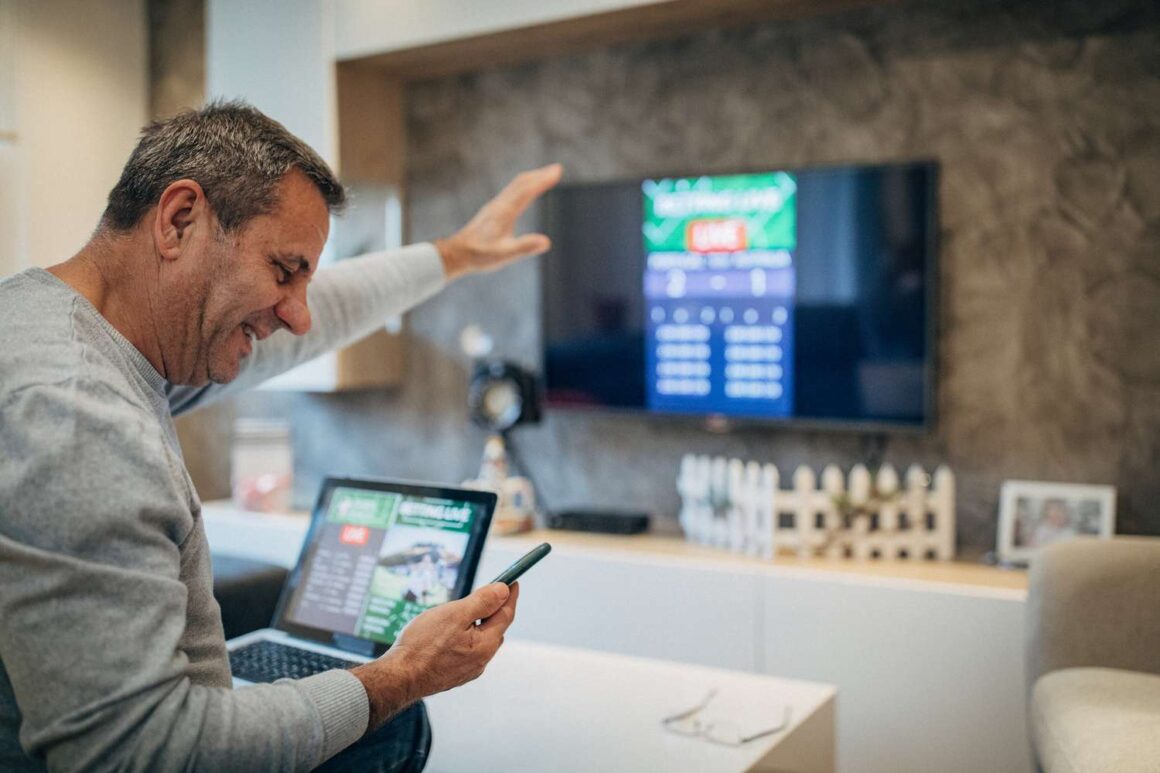
Sports betting can be exciting, social and a fun way to engage with the games we love. It becomes a problem the moment it stops being entertainment and starts being something else — an escape, a source of stress or a hole in the household budget. This guide will help you keep it firmly on the fun side of that line.
What we'll cover
- The four principles of safer play
- Setting up guardrails in your app
- Warning signs — for yourself and others
- Where to get real, confidential help
The four principles of safer play
Every safer-play philosophy in the world can be summarized in four simple ideas.
- Only ever wager money you can afford to lose. Rent, tuition, food and utilities are non-negotiable.
- Set a budget before every session. Not "roughly" — an exact number, written down.
- Time-limit every session. No open-ended scrolling. Set a timer if you have to.
- Never chase losses. A losing streak is a signal to close the app, not to double down.
Guardrails: use the tools your app already gives you
Every regulated operator now has built-in tools to help you stay in control. They are free, they are private, and they work. Use them on day one, not after your first bad month.
- Deposit limits — daily, weekly, monthly. Set them low; they can always be raised later, and by law they take 24–48 hours to increase.
- Session limits — an alarm bell that reminds you how long you've been in the app.
- Loss limits — the app freezes new bets when hit.
- Reality checks — a pop-up at fixed intervals with your current session net.
- Self-exclusion — a full pause, ranging from 24 hours to permanent.
Warning signs to take seriously
Problem gambling rarely arrives in a single dramatic moment. It creeps in through small changes. Recognize the following patterns — in yourself or someone you care about — and act early.
- Betting more than planned, more often than planned.
- Feeling restless or irritable when trying to cut down.
- Chasing losses with bigger stakes.
- Hiding the amount or frequency of bets from family and friends.
- Borrowing money — from cards, friends or new credit lines — to fund play.
- Losing interest in activities that used to be enjoyable.
Any two of these together is a signal to pause and talk to someone.
The maths of "just one more"
When variance turns against you, our brains tell a story: "If I stop now, I'll lock in the loss forever." Statistically, that is exactly wrong. Each new bet is an independent event. The universe has no memory of the last five losers. Neither should your stake size.
How to help someone else
If you are worried about a friend or family member, do three things:
- Listen without judgement — problem gambling is often accompanied by shame that keeps the person silent.
- Suggest one small step — a deposit limit, a 24-hour cool-off, a call to a helpline. Not "quit forever."
- Follow up. Recovery is not a single conversation.
Support resources
Help is confidential, free and available 24/7 in most countries. A short, non-exhaustive list:
- GamCare (UK) — gamcare.org.uk · 0808 8020 133
- National Council on Problem Gambling (US) — ncpgambling.org · 1-800-GAMBLER
- Gambling Therapy (International) — gamblingtherapy.org
- BeGambleAware — begambleaware.org
Talking to a professional does not cost anything and does not go on any record. If any part of you is asking whether it might be time, that itself is worth a phone call.
The Fredan promise
We write about sports and about the betting markets that surround them, because we love both. We will never publish content that glamorizes chasing losses, betting money you cannot afford, or turning gambling into a substitute for work or emotional support. If you spot anything on our site that reads otherwise, please tell us — we take corrections seriously.